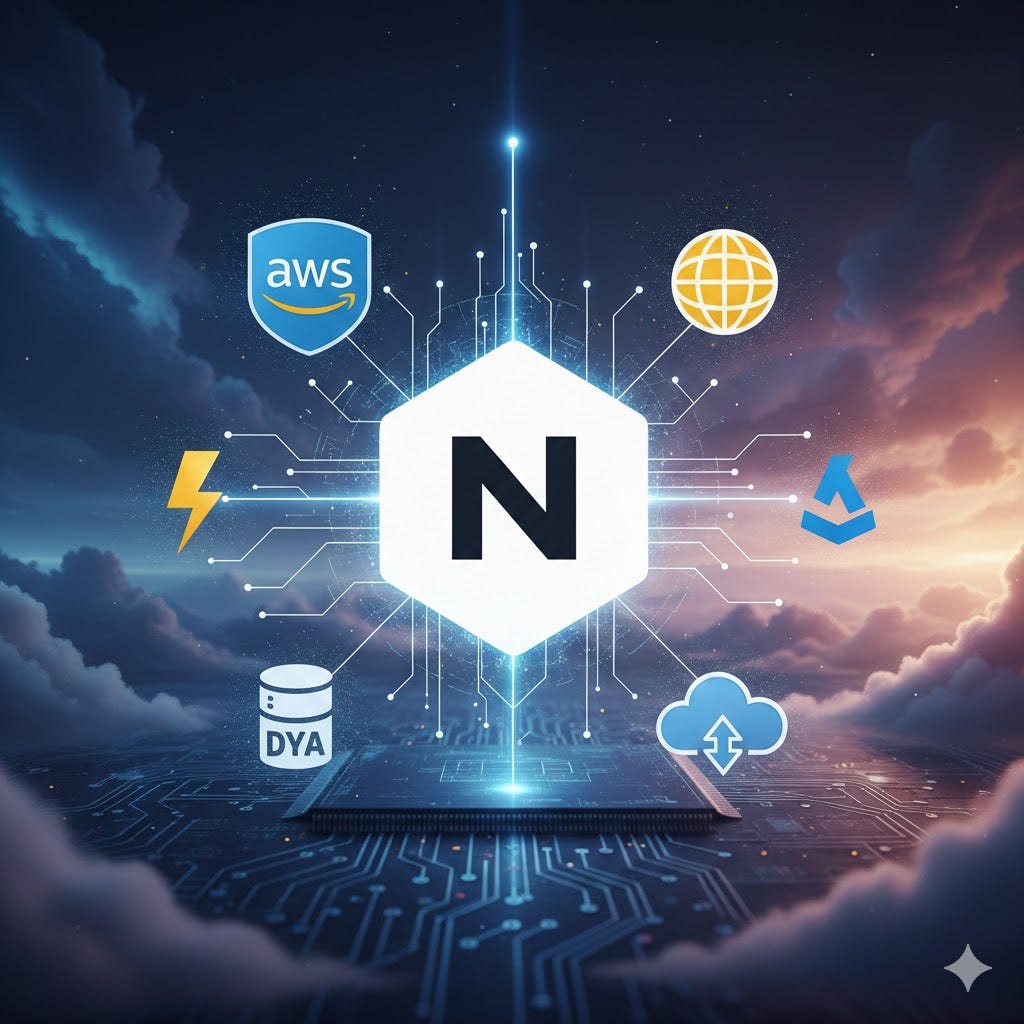
Next.js has evolved rapidly, especially with the App Router, React Server Components, and streaming. At the same time, AWS continues to refine its serverless ecosystem. Combining modern Next.js with AWS serverless services opens a powerful path for building fast, scalable, and cost efficient web applications.
This article explores a modern AWS-centric approach to deploying and scaling Next.js applications using serverless infrastructure.
Why AWS for Modern Next.js
Next.js applications today are no longer just static sites. They often rely on server components, edge rendering, API routes, and background jobs. AWS provides a mature platform that supports all of these needs with high reliability and global reach.
Key AWS advantages include:
- Global content delivery with CloudFront
- Serverless compute using AWS Lambda
- Edge execution with Lambda at Edge or CloudFront Functions
- Secure authentication and APIs with AWS services
Architecture Overview
A modern Next.js application on AWS can be split into three layers:
- Frontend Delivery
Static assets such as images, CSS, and JavaScript are served through Amazon CloudFront. This ensures low latency for users worldwide. - Server Rendering and APIs
Dynamic rendering and API routes run on AWS Lambda. The App Router allows server components to fetch data directly from backend services without exposing APIs to the client. - Data and Services
Backend services like DynamoDB, Aurora Serverless, or S3 handle persistence. Authentication can be managed with Amazon Cognito.
Using Next.js App Router with AWS Lambda
The App Router encourages server first thinking. Components can run on the server, fetch data securely, and stream UI to the client. When deployed on AWS Lambda, this results in highly scalable rendering without managing servers.
Benefits include:
- Automatic scaling per request
- Pay only for execution time
- Built-in fault tolerance
Frameworks like SST or AWS CDK simplify deploying Next.js to Lambda by handling routing, bundling, and infrastructure as code.
Edge Rendering with CloudFront
For pages that need ultra low latency, AWS edge solutions are a strong option. CloudFront Functions are ideal for lightweight logic such as redirects and headers. Lambda at Edge supports more complex rendering tasks.
Next.js middleware integrates well here, enabling:
- Geo based routing
- Authentication checks at the edge
- A faster time to first byte
Handling Images and Assets
Next.js Image Optimization can be offloaded to AWS infrastructure. Images stored in S3 can be served through CloudFront with caching and compression. This reduces load on server functions and improves performance.
Cost and Performance Considerations
Serverless Next.js on AWS is cost efficient when traffic is variable. Cold starts are less noticeable with streaming and edge rendering. Caching strategies using CloudFront and ISR reduce compute usage further.
Best practices include:
- Enable caching headers aggressively
- Use Incremental Static Regeneration for content pages
- Prefer edge middleware for lightweight logic
Final Thoughts
Next.js and AWS are converging toward a future where applications are globally distributed by default. By combining the App Router with AWS serverless services, developers can build applications that are fast, scalable, and secure without managing infrastructure.
This approach is well suited for startups and enterprises alike, especially teams aiming to ship quickly while maintaining production grade reliability.